
I Built Vutore™ for My Daughter's Wedding
Three weeks before her wedding, my daughter Sara came to me with a question.
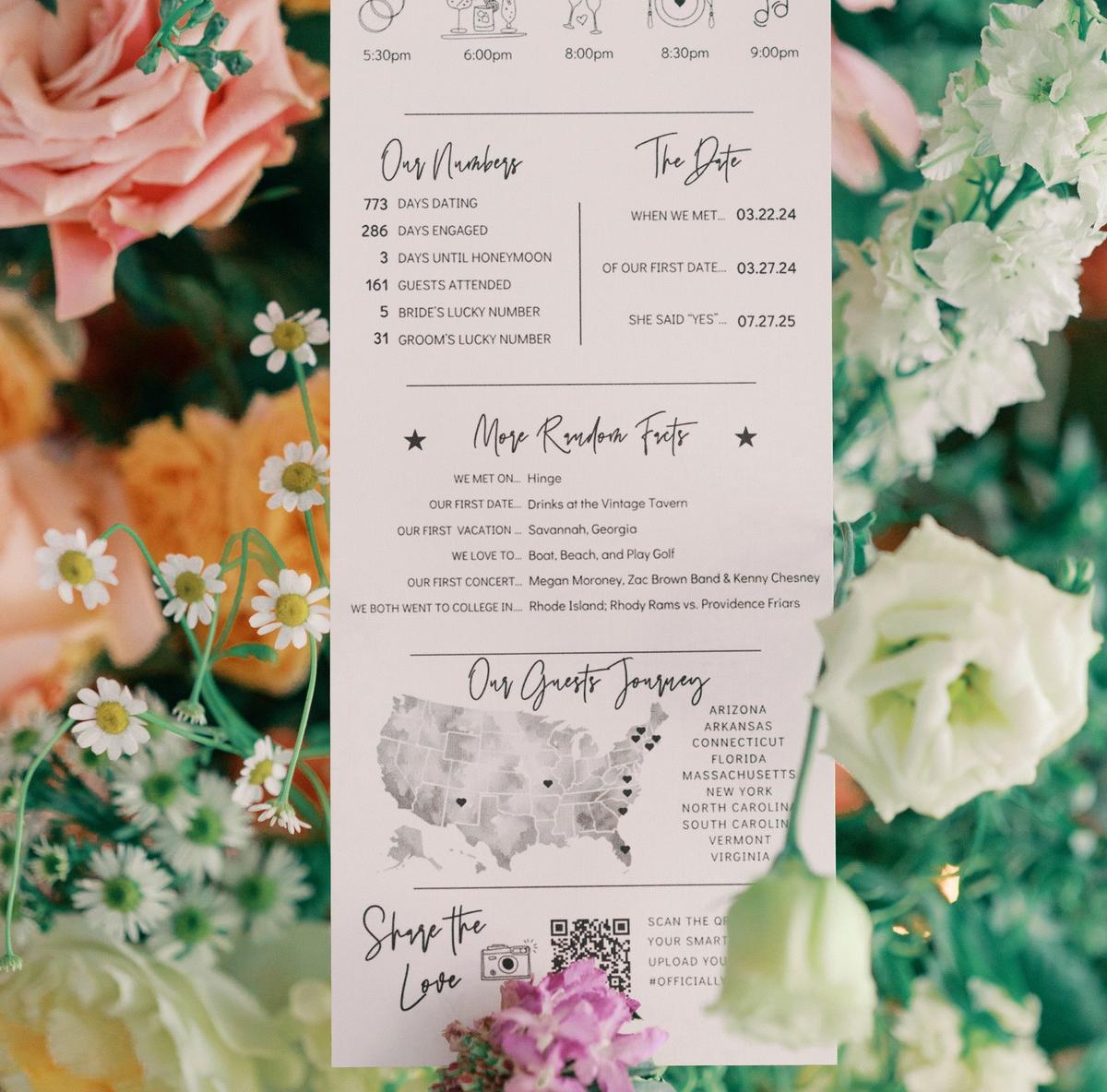
She'd been thinking about how she was going to collect photos from her guests. There was a professional photographer booked, of course. But 161 guests were coming to The Ryland Inn in New Jersey, and every single one of them would have a phone in their pocket taking photos the photographer couldn't be everywhere for. Sara wanted a way to get all of those photos back into one place. She'd looked at a few of the apps that exist to do this. She wasn't sold on any of them. Did I have ideas?
Three weeks is not, by any reasonable measure, enough time to build a piece of software you want strangers using at your daughter's wedding. But that's not really how the builder brain works when the developer is also the father of the bride. I told her I'd look into it. Then I did what I've done my whole career when a problem catches my attention: I started researching what already existed.
The apps I looked at
There are a lot of them. Some are quite polished. But the more I dug in, the more the same three issues kept appearing.
The pricing. Some services quoted monthly subscriptions for a single wedding — which is a strange way to price something that's happening once. Others had per-guest or per-photo caps that ratcheted the "starting at" price up into something very different by checkout. A few used entirely opaque tier systems that felt designed to be hard to compare.
The overhead on guests. Most services asked guests to create an account before uploading, and a few still required app downloads. Even the account-only versions ask too much. The tech-forward guests will get through it. The ones who matter most — Sara's aunts and uncles, the friends who don't want another login, the older relatives who'd rather not fumble with a signup page in the middle of a reception — quietly won't. You lose exactly the guests whose photos would be the most fun to see later.
The limits. Retention windows measured in weeks. Compressed photos instead of originals. Feature caps that would kick in the moment the party got interesting.
Sitting there scrolling through pricing pages, I had a thought that has caused most of the good and bad decisions of my career: I could just build this.
I've had that thought before. It's the builder's reflex — see a problem, reach for the tools. Sometimes it leads somewhere good. This time it led here.
Twenty-five years of quiet buildup
I've spent most of my working life in various IT roles at a Fortune 100 company. Later I joined a startup based on a medical device patent I invented. Another pivot took me to my current role as CTO at a SaaS company — where, by the way, my team has explicitly forbidden me from writing production code. This is fair. It is, however, the kind of restriction that makes the developer part of me look for other outlets.
I've always thought of myself as a builder. Not in the wearing-a-tool-belt sense — in the sense that when I see a problem, my first instinct is to build the solution to it. It's the pattern of my whole career. Long before I could articulate it that way, I was doing it: fixing something that felt broken, or missing, or awkward, by making the thing that would fix it. Sara's wedding was the same instinct, just pointed at a problem I cared about more than usual.
Years ago, back in the early iPad days, one of my daughters played on a travel basketball team that needed a better way to keep score. I built an electronic scorebook app, put it on the Apple App Store, sold it for a few years, and had a modestly successful run with it. Not a life-changing business, but enough to remember what it feels like to build a real thing that real people pay for and use.
The pattern is familiar to anyone who builds for a living: you see a problem someone you care about is dealing with, and you can't quite unsee it. Vutore came from the same place. It just happened to be Sara's wedding, and the deadline was three weeks.
One week to a working version
I had three weeks. Realistically, I had one — because a wedding is not the kind of event where you deploy new software the night before and hope for the best. If it wasn't done and tested inside a week, it wasn't going in.
The core was simpler than I'd expected. A guest lands on a page from a QR code. They type a name. They upload photos from their phone. Everything lands in one gallery. No app. No account required. The photos are original resolution. The host can download everything as a ZIP whenever they want.
By the end of the week, that all worked. The next two weeks were testing it on every phone I could get my hands on, printing QR codes, and quietly panicking about all the edge cases I was probably missing. Then Sara's wedding happened, and everything I thought I understood about the product was reframed within about four hours.
What guests actually did
The first thing I noticed at the wedding was that people used it more than I expected — and the reason they used it more was that other people were using it. Guests would take a photo, upload it, and then check to see whose photo it landed next to. That checking behavior wasn't something I'd designed for. It was something guests wanted to do, and my minimum-viable version didn't accommodate it well.
That became the attendee gallery — a shared view of all the photos that everyone at the event had uploaded, browsable by any guest. It's now one of the most-used parts of Vutore™. Sara's wedding invented it.
The second thing was harder to see in the moment but obvious in hindsight. The photos were beautiful, and they were sitting in a gallery only I could see. Someone at the reception said something like "we should put these up on the screen" and my brain caught fire. Live photos, arriving as guests uploaded them, projected on a screen where everyone could see them appear. Not something at the end of the night — something during the night, as the reception was happening.
That became the live slideshow. It's now the feature couples ask about first when they're deciding whether to use Vutore.
Both features exist because Sara's wedding produced feedback I couldn't have gotten from a spec document, no matter how many customer interviews I ran.
From weekend project to real product
After the wedding I did what most engineers do when they've built something that seemed to work. I looked at the market to see if it was actually a business or just a fun weekend.
Turns out it's a real market. There's search volume for the problem. There are couples every day writing "how do I collect photos from my wedding guests" into Google. Every venue in America hosts weddings every weekend where guests are taking photos that no one will ever share, and the couple will eventually decide that's fine because the alternative — asking people, chasing camera rolls, herding an entire guest list into an app — is worse than just letting the photos disappear.
So I turned the weekend project into a company. Code After Dark LLC, based in New Jersey. Vutore™.
Why I'm telling you this
If you're reading this, you probably arrived through a search for a wedding photo sharing app. And I want you to know two things about the person on the other end of the product you're evaluating.
I built it for a wedding I actually cared about. Not a hypothetical wedding. Not a persona in a Figma file. My daughter's, at a venue I've now walked around a hundred times, for guests I know by name. Every design decision was made against a real bar: "would this work for Sara's wedding?" If it wouldn't, it didn't ship.
And I stay close to the product. If something in Vutore™ doesn't work the way it should, an email to support gets to me directly. Feature requests get read, not sorted into a queue. That's the tradeoff of picking a founder-led product — you're not one of ten thousand tickets a support team is triaging. You have a direct line to the person who cares most about whether it works for you.
If you're planning a wedding, or hosting an event, or running something where you know guests are going to take photos you'd love to see, Vutore is the honest version of the thing I couldn't find for my daughter. You can try it here, free.
And Sara, if you're reading this — thank you for letting me use your wedding as R&D. I know that wasn't the pitch.